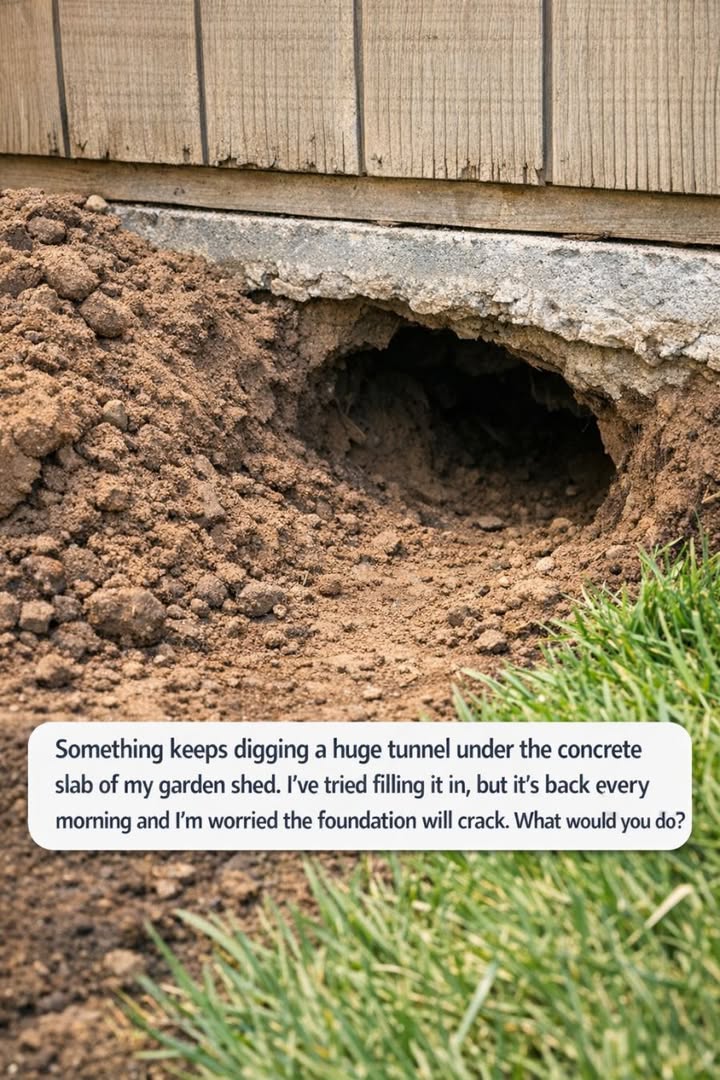
Something keeps digging a huge tunnel under the concrete slab of my garden shed. I’ve tried filling it in, but it’s back every morning and I’m worried the foundation will crack. What would you do?

5. Use Humane Harassment Tactics to Make the Burrow Less Appealing
Groundhogs can be discouraged from returning to their burrow by making the area less appealing. One method is to employ motion-activated sprinklers, which scare the animal away with sudden bursts of water. Another effective tactic is to use predator urine or commercial repellents around the burrow entrance.
Creating noise or vibrations, such as with wind chimes or ultrasonic devices, can also deter groundhogs. The goal is to make the environment uncomfortable so the groundhog will naturally seek a new location.
6. Deploy Live Traps the Right Way (And Check Local Wildlife Laws)
If the groundhog is persistent, you may need to trap and relocate it. Use a live trap that is at least 12 x 12 x 32 inches, and place it near the burrow entrance. Bait it with fruits or vegetables like apples, carrots, or lettuce.
Before proceeding, ensure you are familiar with local wildlife regulations, as trapping and relocating animals may require permits or professional assistance. Always check the trap regularly to ensure humane treatment of the captured animal.
7. Seal Off the Burrow Safely Once You’re Sure It’s Vacant
After confirming that the burrow is vacant, seal it to prevent reoccupation. Fill the tunnel with gravel or a soil-cement mixture that hardens over time. Cover the entrance with a heavy-duty wire mesh that extends at least 12 inches underground and outward to discourage future digging.
It’s important to ensure that no animals are trapped inside before sealing, which could lead to inhumane outcomes.
8. Install a Dig-Proof Barrier Around the Shed Perimeter
To prevent future burrowing, install a dig-proof barrier around the shed’s perimeter. Use galvanized wire mesh or hardware cloth, burying it at least 12 inches deep and bending it outward at a 90-degree angle to create a protective apron. This barrier should extend at least 24 inches above ground to deter climbing as well.